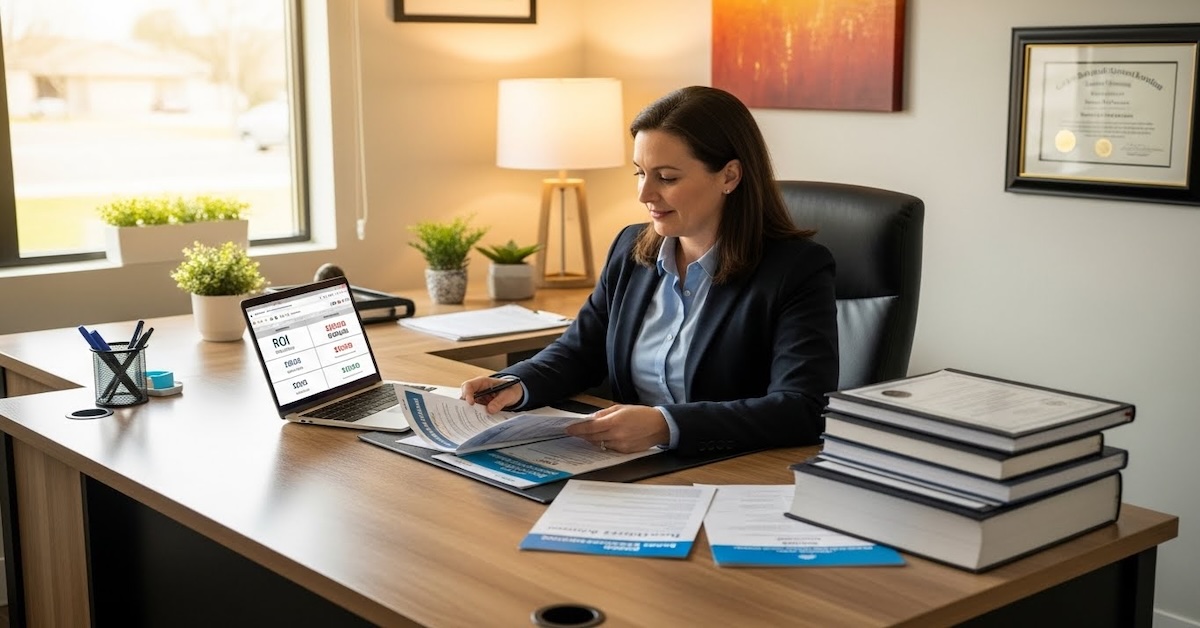
Yes, addiction counseling degrees are worth it for students who strategically select their program and state. Master’s degrees from affordable public universities in high-paying states like Washington and Utah deliver $600,000+ ten-year ROI, while certificate programs offer rapid entry under $8,000. However, ROI varies dramatically by location, credential level, and career planning—making informed program selection critical to achieving positive returns.


You’re standing at a crossroads. The addiction crisis is worsening—over 107,000 Americans died from drug overdoses in 2024—and you’re considering whether an addiction counseling degree is worth the investment. It’s a legitimate question. You’ve heard stories about meaningful work transforming lives, but you’ve also seen the salary numbers and calculated the student loan payments.
The truth is more nuanced than a simple yes-or-no answer. Addiction counseling degrees can generate $600,000+ in ten-year returns, or they can leave you with modest pay and substantial debt. The difference comes down to three critical decisions: which degree level you pursue, which state you practice in, and which program you choose.
This analysis cuts through the marketing language to show you the real numbers. We’ll examine state-by-state ROI data, compare degree levels using actual Bureau of Labor Statistics salary figures, and reveal the hidden costs that can derail your returns. You’ll see which pathways generate strong financial outcomes and which ones don’t. Most importantly, you’ll get a framework for deciding whether this career—and which specific educational route—makes sense for your situation.
The Real Cost of Addiction Counseling Degrees
Certificate Programs: Fastest Entry Point
Certificate programs offer the lowest financial barrier to entry in addiction counseling. Portland Community College charges approximately $6,000 for its addiction counseling certificate, while Washington state programs average $8,357. These credentials require 300-600 training hours—significantly fewer than those required for degree programs—and can be completed in under a year.
You’ll qualify for Substance Use Disorder (SUD) Technician positions, earning a median salary of around $42,590. The math works in your favor for quick entry: at a $6,000-$8,000 investment, you’ll break even within 2-3 years of employment. This makes certificates attractive if you need immediate income or want to test the field before committing to a longer degree program.
The catch? Certificates cap your earning potential. You’ll work under supervision, handle entry-level responsibilities, and lack the credentials for independent practice or clinical roles. Think of certificates as a starting point, not a destination. They get you in the door, but advancement requires additional education.
Associate Degrees: Middle Ground Option
Two-year associate degrees from community colleges typically cost $12,000-$15,000 for addiction counseling programs. These credentials position you for Associate Counselor roles with median earnings in the $47,170-$52,000 range—a modest increase over certificate-only positions.
The strategic value of associate degrees lies in their role as stepping stones. You can work as an associate counselor while completing your bachelor’s degree part-time or online. This approach minimizes income loss during your education and builds supervised clinical hours that may reduce practicum requirements in later degree programs.
However, treating an associate degree as your terminal credential limits long-term ROI. The salary ceiling remains relatively low, and career advancement opportunities narrow without further education.
Bachelor’s Degrees: Professional Practice Entry
This is where costs increase substantially. Public in-state universities charge an average of $55,000 for four-year degrees in addiction counseling or related behavioral science. Out-of-state tuition jumps to around $119,000—a difference that dramatically affects ROI calculations.
Private universities present even higher costs without proportional salary returns. The data is precise: public institutions deliver better ROI across the board. A bachelor’s degree opens doors to Counselor positions, with a $59,190 median salary, representing meaningful income growth compared to associate-level practitioners.
But here’s what the promotional materials don’t emphasize: four years of foregone income significantly impacts net ROI. If you could have earned $42,590 annually as a technician during those four years, you’re sacrificing $170,360 in potential revenue. This opportunity cost must factor into your ROI calculation, reducing the net ten-year return from $536,900 to approximately $366,540 for typical in-state programs.
Master’s Degrees: The Clinical Counselor Premium
Graduate programs show the widest cost variation and the highest potential returns. Public university master’s programs in addiction counseling range from $14,283 at Eastern Washington University to $45,420 for Indiana’s MSW programs—a $30,000+ spread that profoundly impacts ROI.
Private institutions like Capella University charge $44,760, while Crown College costs $38,100. These private program costs typically exceed those of public universities without delivering proportionally higher graduate salaries. The pattern holds: public education generates superior ROI.
The master’s degree unlocks Clinical SUD Counselor positions, with a median salary of $76,230—a 29% premium over bachelor ‘s-level earnings. This translates to an additional $17,040 annually, which recovers typical program costs ($25,000-$35,000) within just 1.5-2 years of practice. Over 10 years, top programs generate returns ranging from $447,000 to over $627,000, depending on the state and program selection.
The master’s threshold also opens eligibility for independent practice, diagnostic authority, and supervisory roles—all of which command additional compensation beyond base salaries.
Hidden Costs Students Overlook
ROI calculations must account for expenses beyond tuition. Supervision fees during your clinical training periods range from $1,000 to 3,000, depending on state requirements and supervisor rates. Certification examinations cost $260-$295 in most states, with some requiring multiple tests for different credential levels.
Background checks and drug screening are mandatory for all addiction counseling positions, adding another $100-$200 to your costs. The most significant hidden expense comes during practicum periods. Master’s programs typically require 600+ supervised clinical hours, and many of these placements are unpaid or minimally compensated. If you need to reduce your working hours to complete practicum requirements, the resulting income loss can delay ROI realization by 6-12 months.
State licensure application fees vary widely but typically run $200-$500 per application, with renewal fees every two years adding ongoing costs throughout your career.
What You’ll Actually Earn: Salary Expectations by Credential
Entry-Level Positions (Certificate/High School Diploma)
Substance Use Disorder Technicians with certificates or high school diplomas have a median salary of $42,590. However, some positions may start lower depending on location and setting, according to 2024 Bureau of Labor Statistics data. You’ll work under the supervision of a licensed counselor, implementing treatment plans, conducting intake interviews, and facilitating group sessions.
The role provides stable employment—remember, the field is projected to grow 17% through 2034—but limited advancement potential. Technician positions serve best as entry points while you pursue higher credentials or as supplemental income for career changers testing the field before committing to degree programs.
Bachelor’s-Level Counselors
Four-year degree holders qualify for Counselor or Associate Counselor positions, earning a median salary of $59,190. This represents a $16,600 annual increase over technician-level positions—a meaningful jump that improves quality of life and savings capacity.
However, bachelor’s-level counselors still require clinical supervision, cannot diagnose substance use disorders independently, and face limited opportunities for private practice. You’ll work in treatment facilities, hospitals, or community health centers providing direct patient services, but you’re not yet at the independent clinical practice threshold.
Master’s-Level Clinical Counselors
The master’s degree transforms your earning potential and professional autonomy. Clinical SUD Counselors with graduate degrees earn $76,230 median salary—29% more than bachelor ‘s-level practitioners. This isn’t just a modest bump; it’s an additional $17,040 annually that compounds significantly over a career.
Graduate credentials provide diagnostic authority, treatment planning autonomy, and eligibility for hospital-based positions paying a median of $65,240. You can pursue private practice options, supervise lower-credentialed counselors, and access specialized treatment programs (trauma counseling, medication-assisted treatment) that command premium compensation.
Independent Practice and Supervision Roles
The upper tier of addiction counseling—Independent Clinical Counselors and Supervisors—requires master’s degrees plus extensive experience, typically 2,000-3,000 supervised clinical hours. These positions start at $98,210, and the top 10% earn more than $100,000 annually.
Supervisory roles add $10,000-$20,000 to base salaries while reducing direct clinical caseload intensity. This combination of higher pay and decreased emotional demands makes supervision an attractive mid-career pivot that extends career longevity and maximizes lifetime ROI.
How Your Work Setting Affects Pay
Where you work matters as much as your credentials; hospitals pay Clinical SUD Counselors $65,240 median, the highest of any setting. Outpatient centers offer $56,480, while individual and family services provide $56,320. Residential facilities pay the least, at a median of $51,840.
This 26% pay variance across settings means two counselors with identical credentials can have dramatically different financial outcomes. Hospital positions typically require master’s degrees and offer better benefits, but they’re also more competitive. Residential facilities hire bachelor’s-level counselors more readily but pay less and often involve weekend/evening hours.
Your ROI calculation should account forthe probable employment setting based on your credential level and local job market conditions.
ROI Analysis: Top 10 States for Addiction Counseling Degrees
ROI varies by more than $200,000 between states due to differences in program costs, median salaries, and cost of living. Strategic state selection dramatically impacts your financial outcomes.
| State | Top Program | Program Cost | Median Salary | 10-Year ROI |
|---|---|---|---|---|
| Washington | Eastern Washington University | $14,283 | $64,220 | $627,917 |
| Utah | Rocky Mountain University | $44,280 | $65,920 | $614,920 |
| Missouri | Public universities | ~$25,000 | $58,000 | $555,000 |
| New Mexico | Public universities | ~$22,000 | $56,500 | $543,000 |
| South Dakota | Public universities | $21,150 | $53,400 | $512,850 |
| Indiana (Traditional) | Indiana University | $35,000 | $59,700 | $562,948 |
| Oregon | Public universities | ~$28,000 | $58,900 | $561,000 |
| Alaska | University of Alaska | ~$30,000 | $79,220 | $762,200* |
| Indiana (MSW) | Indiana MSW programs | $45,420 | ~$49,280 | $447,380 |
| California | Public universities | $40,000+ | $61,310 | $573,100** |
*Alaska figures don’t account for the high cost of living and remote location factors. The Alaska nonmetropolitan salary of $80,210 is based on BLS data for nonmetropolitan areas and may not reflect actual job availability in remote locations.
**California ROI eroded by living expenses despite high nominal salary
The Washington Advantage
Eastern Washington University’s online MA in Addiction Studies program delivers the highest ROI in our analysis, at $627,917 over 10 years. The program costs only $14,283 total—less than a single year at many private universities—while Washington’s median salary for addiction counselors reaches $64,220.
What drives Washington’s exceptional returns? Strong union presence in healthcare sustains higher wages across behavioral health professions. The state’s robust public funding for addiction services creates consistent demand for qualified counselors. Additionally, Washington’s licensing structure recognizes multiple pathways to independent practice, giving graduates flexibility in building their careers.
For students willing to complete an online program or relocate to Washington, the state offers the optimal ROI. Learn more about Washington state addiction counselor requirements.
Utah’s Unique Demographics
Rocky Mountain University’s MS in Addictions Counseling program generates a a $614,920 ten-year ROI despite the higher tuition of $44,280. Utah’s $65,920 median salary—the highest in our analysis—compensates for the elevated program expense.
Utah’s addiction counseling market benefits from unique demographic factors. Large religious communities emphasizing family support services generate steady demand for counseling professionals. The state’s relatively lower cost of living amplifies the real value of the $65,920 median salary compared with higher-cost states that offer similar nominal wages.
Utah also offers accelerated credentialing pathways, allowing graduates to begin independent practice more quickly than in states with extended supervision requirements.
The Indiana Paradox
Indiana illustrates why program selection matters as much as state location. Traditional counseling master’s programs in Indiana generate $562,948 ROI, while MSW programs with addiction concentrations show diminished returns at only $447,380—a $115,000 difference within the same state.
The divergence stems from both program costs and salary outcomes. Indiana’s MSW programs charge $45,420, compared to $35,000 for specialized counseling degrees. In contrast, MSW graduates in addiction counseling roles earn approximately $49,280 (varies by employer and specific position), compared to $59,700 for counseling master’s graduates.
The lesson: credential specificity influences both education costs and employer salary determination. More generalized degrees (MSW) cost more and may not command premiums in specialized addiction counseling roles.
Rural Alaska’s Premium Pay
Alaska commands attention with the nation’s highest median salary at $79,220. More remarkably, the state’s nonmetropolitan areas, based on BLS data, average $80,210—though this may not reflect actual job availability in remote locations—suggesting that rural placement strategies can optimize returns.
However, Alaska ROI calculations require careful nuance. Remote program availability limits in-state education options, potentially forcing students toward more expensive out-of-state programs. Alaska’s elevated cost of living erodes the real value of higher nominal salaries. Housing, food, and basic goods cost 30-50% more than in the lower-48 states.
Alaska makes sense for specific profiles: students comfortable in rural/remote environments, those eligible for loan forgiveness programs tied to rural service (Indian Health Service, VA), or individuals prioritizing rapid debt payoff through high absolute earnings.
States to Approach with Caution
California presents a cautionary tale. Despite median salaries reaching $61,310—among the highest nationally—the state’s education costs and living expenses erode real ROI. Public university tuition averages $13,811 in-state, but net prices often exceed $18,000 annually when accounting for regional living costs.
Major California metro areas show credential saturation in hospital-based positions, the highest-paying setting category. Competition for limited openings reduces the probability of acquiring a job, potentially delaying ROI realization. Smaller cities and rural California communities offer better employment odds but often at lower compensation than statewide medians.
Alternative recommendation: Consider Southern and Midwestern states that offer affordable public education and moderate salaries, yielding strong net ROI despite lower absolute earnings. South Dakota ($512,850 ROI from $21,150 programs), Missouri, and New Mexico exemplify this approach.
Which Degree Level Gives the Best Return?
The Certificate-to-Master’s Pathway (Recommended for Most Students)
This strategic approach maximizes ROI while minimizing debt burden and income disruption. Here’s how it works:
Years 1-2: Complete an addiction counseling certificate ($6,000-$8,000) and begin working as an SUD Technician, earning $42,590 median. You’re generating income immediately while testing your fit for the field.
Years 3-6: Enroll in an online bachelor’s degree program while continuing to work. Your employer may offer tuition assistance (many treatment facilities do), and you’re building supervised clinical hours that count toward advanced credentials. You maintain a steady income throughout.
Years 7-9: Complete a master’s degree part-time or full-time while working reduced hours. You’ve saved money during bachelor’s completion, potentially reducing loan dependence. Your clinical experience may qualify you for advanced practicum placements.
Years 10+: Enter independent practice as a Clinical SUD Counselor earning $76,230+ with minimal debt and continuous employment history.
This pathway generates positive cash flow from year one and typically results in lower total debt than traditional direct-to-master’s routes. The trade-off is time—it takes 8-10 years to reach full clinical licensure, compared with 6-7 years forconventionall paths.
Direct-to-Master’s Path (For Traditional Students)
If you have strong financial support, minimal income needs during education, and want the fastest route to clinical practice, the traditional path makes sense:
Years 1-4: Complete a bachelor’s degree in psychology, counseling, or social work
Years 5-7: Complete a master’s in clinical mental health counseling or addiction counseling
Years 7-10: Build supervised hours while working as a Clinical SUD Counselor
You’ll reach $76,230+ salaries by year 7, three years earlier than the certificate-to-master’s pathway. Over a 35-year career, this is a modeled projection based on assumptions about continuous employment and salary stability—this head start could generate approximately $200,000 in additional lifetime earnings despite the larger upfront debt burden.
The disadvantage: four years of foregone income ($170,360 at technician-level wages) plus potentially higher debt from full-time enrollment. Your break-even point arrives later, but ultimate lifetime earnings may exceed the incremental pathway.
Best for: Recent high school graduates with family financial support, students receiving substantial scholarships, or those with a clear career commitment from the outset.
Associate Degree as Terminal Credential (Not Recommended)
Stopping at an associate degree caps earning potential at $47,170- $52,000 annuall, only $4,500- $9,400 more than certificate-level positions. Over 10 years, the incremental ROI of an associate degree over a certificate ranges from $ 45,000 to $94,000, less than the income boost from advancing to a bachelor’s degree.
The opportunity cost calculation is unfavorable: investing another 2-3 years to complete a bachelor’s degree yields far greater returns than stopping at the associate level.
Limited exception: Career changers later in life (age 50+) with established income from other sources who want part-time supplemental work in a meaningful field. For these individuals, associate degrees provide sufficient credentials without the time investment of bachelor’s/master’s programs.
When a Bachelor’s Degree Alone Makes Sense
Some states allow bachelor’s-level counselors with sufficient experience to achieve independent practice credentials. If you practice in one of these states and calculate that your specific state’s bachelor’s-level median salary ($47,000-$62,000 range) generates an acceptable ROI, a bachelor ‘s-only path may work.
Calculate this carefully: Compare your state’s bachelor’s-level median against master’s program costs. If the premium for master’s education ($17,040 annually) would take more than 3 years to recover program costs, remaining at the bachelor’s level becomes rational—especially if you can pursue master’s education part-time later while working.
Most students, however, will find that master’s degrees generate a superior long-term ROI despite the higher upfront investment.
Risk Factors That Can Derail Your ROI
Burnout: The Career Killer
The most significant threat to realizing projected ROI isn’t financial—it’s emotional sustainability. Addiction counseling involves sustained exposure to trauma, relapse, and client crises. High caseloads (25-35 clients for outpatient counselors, higher in residential settings) combine with relatively modest pay to create significant burnout risk.
Our ROI calculations assume 10 years of continuous practice. If you leave the field after 5 years due to burnout, you’ve missed half the projected returns while still carrying the full education debt. Many counselors report leaving within 5-7 years due to burnout, based on practitioner accounts and community discussions. A Reddit practitioner warning resonates: “This profession demands a great deal from you, which makes self-care essential rather than optional.”
Mitigation strategies:
- Choose work settings carefully (outpatient centers typically offer better work-life balance than 24/7 residential facilities)
- Set firm boundaries around caseload size and after-hours availability
- Maintain regular clinical supervision even after independent licensure
- Diversify your role after 5-7 years (add supervision, teaching, consultation)
- Treat self-care as a professional obligation, not an optional self-indulgence
Career longevity directly determines whether you achieve projected ROI or fall short.
Geographic Mobility Constraints
Unlike nursing or teaching, addiction counseling credentials lack robust interstate reciprocity. Moving from Washington to California might require:
- $5,000-$10,000 in re-certification costs
- 6-12 months of additional supervision hours
- Retaking examinations specific to the new state
- Completing state-specific ethics or jurisprudence courses
These barriers create hidden mobility penalties. If you need to relocate for family reasons, your credential value diminishes until you complete the new state’s requirements. This period of reduced or no income delays ROI realization and may permanently reduce lifetime earnings.
Plan: Choose states where you intend to remain long-term, or research states with reciprocity agreements with your intended practice location. Check state-specific addiction counselor requirements before committing to programs. Some credentials (specific IC&RC certifications) transfer more easily than state-specific licenses.
Market Saturation in Urban Centers
San Francisco offers an impressive median salary of $ 72,950, but credential saturation creates intense competition for the highest-paying hospital positions ($65,240 median). New graduates may wait 6-12 months to secure preferred positions, accepting lower-paying residential facility jobs ($51,840) during the gap.
Conversely, rural and nonmetropolitan areas show counselor shortages—Alaska’s remote regions, based on BLS data, average $80,210 in salaries with significantly less competition. Rural communities in Montana, Wyoming, and Idaho offer loan-forgiveness programs designed to attract counselors to underserved areas.
Geographic arbitrage opportunity: Build credentials in affordable states with good training programs, then target rural high-need areas offering both premium pay and loan forgiveness. This combination can add $50,000-$80,000 to your effective ROI.
Insurance Reimbursement Pressures
Practitioners report declining reimbursement rates from commercial insurers, particularly for bachelor’s-level services. According to practitioner reports, Medicaid authorization requirements have increased, reducing billable hours through administrative burden. These trends threaten future salary growth.
Master’s-level independent practitioners maintain better billing privileges and can contract directly with insurers at negotiated rates. This structural advantage favors graduate credentials increasingly over time. Bachelor’s-level counselors working for agencies face pressure on compensation as reimbursement rates stagnate.
Forward-looking ROI calculations should apply conservative salary growth assumptions (2-3% annually) rather than assuming continuous increases. The golden era of addiction counseling salary growth appears to be stabilizing.
Student Loan Burden Reality
The abstract concept of “$40,000 in student loans” becomes concrete when monthly payments start: $400- $600 (typical for $40,000 debt on a standard 10-year repayment plan) for a typical 10-year repayment plan. On a $59,190 bachelor’s-level salary, this represents 8-12% of gross income—a material impact on quality of life and savings capacity.
Income-driven repayment plans reduce monthly payments but extend repayment periods and increase total interest paid. The psychological burden of long-term debt can affect career satisfaction. It may pressure counselors to remain in higher-paying but less fulfilling positions rather than pursue roles aligned with their values.
Loan forgiveness programs help mitigate this risk. The Indian Health Service offers $25,000- $50,000 in loan repayment for 2-year commitments to serve tribal communities. Veterans Affairs provides similar programs. Public Service Loan Forgiveness (PSLF) applies to nonprofit treatment facility employment—after 10 years of qualifying payments, any remaining federal loan balance is forgiven.
Strategic debt management becomes part of ROI optimization, not an afterthought.
Is an Addiction Counseling Degree Worth It for YOU?
Beyond ROI numbers, personal fit determines both career success and life satisfaction. The financial analysis answers whether degrees generate positive returns. This section helps you answer whether you should pursue those returns.
You’re a Strong Candidate If:
You have personal or family experience with addiction. The most satisfied practitioners often have lived experience with addiction—either their own recovery or supporting a loved one through treatment. You understand the weight of addiction firsthand, and that pain drives genuine commitment rather than abstract compassion.
You’re comfortable with emotional intensity. Addiction counseling isn’t emotionally neutral work. You’ll hear traumatic stories, watch clients relapse after months of progress, and sometimes lose clients to overdose. If you can handle this intensity without taking it personally or burning out, you possess a critical professional asset.
You value meaning over maximum income. Be honest: if income maximization drives your career choices, addiction counseling isn’t the best fit. Social workers, nurses, and business professionals with similar levels of education often earn more. You choose this field because the work matters to you, and financial adequacy suffices even if you’ll never get wealthy.
You can handle clients who relapse without judgment. Relapse is typical in addiction recovery. If you measure success only by abstinence and interpret relapse as personal failure (yours or the client’s), you’ll burn out quickly. Strong candidates understand relapse as part of the recovery process and maintain therapeutic alliance through setbacks.
You’re strategic about credential and location selection. You’ve read this analysis, understand that ROI varies by state and degree level, and you’re willing to make strategic decisions rather than follow your passion. You’ll choose Washington over California if the ROI math supports it, even if California feels more appealing initially.
You’re willing to prioritize self-care. You understand that sustaining this work requires boundaries, clinical supervision, peer support, and personal therapy. You won’t martyr yourself for clients or allow the work to consume your entire identity.
Red Flags: This May Not Be the Right Path:
Your primary motivation is “helping people” without boundaries. Vague desires to help often mask unresolved personal needs. Addiction counseling requires clear professional boundaries—if your self-worth depends on client success, you’ll burn out within 2-3 years. The work helps people, but it’s a profession, not a rescue mission.
You expect quick emotional rewards. Recovery happens slowly, often invisibly. You might work with a client for months before seeing meaningful progress. If you need regular affirmation and visible results, other helping professions (teaching, nursing) might be a better fit.
You need a high income quickly. Entry-level positions have a median salary of $42,590, though some positions may start lower. Even master’s-level salaries ($76,230) won’t make you wealthy. If you have substantial existing debt or dependents requiring immediate high income, prioritize more lucrative fields first. You can always return to addiction counseling after establishing financial stability.
You struggle with vicarious trauma or emotional regulation. Hearing detailed trauma histories affects counselors. If you already struggle with anxiety, depression, or emotional regulation, adding clients’ trauma to your cognitive load may overwhelm your coping capacity. Address your own mental health solidly before taking on others’ crises professionally.
You want a low-stress career. This isn’t it. High caseloads, clients in crisis, organizational pressures, and documentation requirements create significant stress. If work-life balance and low stress drive your career choices, look elsewhere.
You’re considering it only because “you like people.” Liking people is table stakes, not a qualification. The work requires specific skills: sitting with intense emotions without trying to fix them, maintaining boundaries despite manipulation attempts, tolerating ambiguity in treatment outcomes, and navigating bureaucratic constraints in healthcare systems. Liking people doesn’t predict any of these capabilities.
The Practitioner Reality Check
Real counselors describe the work with both enthusiasm and caution. One Washington-based practitioner enthusiastically endorses the field: “I absolutely love it! It is so rewarding and fulfilling.” But this same community consistently emphasizes: “This profession demands a great deal from you.”
The rewards aren’t primarily financial. Practitioners describe profound non-financial ROI:
- Receiving heartfelt thank-you messages from former clients years after treatment
- Witnessing the pivotal moment when a client truly commits to recovery
- Knowing you prevented a suicide or overdose through timely intervention
- Building lasting relationships with clients whose lives you’ve impacted
- Contributing to community recovery in tangible, visible ways
One practitioner captures the core trade-off: “You won’t get rich, but you’ll know your work matters.” If this resonates more than salary maximization, you’re aligned with the field’s intrinsic rewards.
Alternative Pathways to Consider
If addiction counseling interests you but the financial ROI or emotional demands concern you, consider these adjacent paths:
Peer Support Specialist: Lower education requirements, values lived experience over credentials, works collaboratively with licensed counselors: less autonomy but faster entry and meaningful impact.
Clinical Mental Health Counseling with addiction concentration: Preserves career flexibility. You can work in addiction treatment, but also pivot to anxiety, depression, and relationship counseling. One experienced counselor advises: “Never pigeonhole yourself, always go broad,d then figure out your focus.”
Social Work with addiction specialization: MSW degrees provide maximum flexibility across mental health, child welfare, and medical social work. You can specialize in addiction while maintaining options if you burn out or want different challenges later.
Psychiatric Nursing: Higher pay ($88,000+ median), medical model approach, prescribing privileges in many states. More science-focused than counseling-focused, but directly addresses addiction through medication-assisted treatment.
Prevention Specialist: Upstream work focusing on education and community programs rather than clinical treatment. Different skill set, typically less emotionally intense, but also less direct client connection.
Each alternative addresses different concerns while maintaining a connection to addiction treatment systems.
Strategic Recommendations to Maximize Your ROI
For High School Graduates and Career Changers
Your best pathway: Certificate-to-Master’s incremental approach
Start with a certificate program ($6,000- $8,000) at a community college. Portland Community College, Washington state programs, and other local options provide quick entry. Complete your certificate in 6-12 months.
Immediately begin working as a SUD Technician. You’re earning $42,590 while building clinical experience and testing whether the field truly fits you. Many treatment facilities offer tuition assistance benefits after 6-12 months of employment.
Enroll in an online bachelor’s degree program in psychology, counseling, or social work. Work full-time while completing your degree over 3-4 years. Your employer’s tuition assistance offsets costs, and you’re accumulating supervised clinical hours simultaneously.
Aftercompleting a bachelor’s, work 1-2 years to save for master’s program costs and meet employer thresholds for additional tuition assistance. Many organizations provide enhanced benefits for graduate education.
Complete your master’s degree online or part-time while working reduced hours. You’ve minimized debt through consistent income and employer assistance, and you’ve graduated with clinical experience, an established professional network, and manageable student loans.
Total timeline: 8-10 years to full clinical licensure
Typical debt: $15,000-$30,000 (versus $60,000+ for traditional routes)
Advantage: Positive cash flow from year one, lower debt burden, extensive clinical experience
For Current Bachelor’s Degree Holders
Decision framework: Calculate your state-specific ROI
Use this formula:
- Find your state’s master’s-level median salary (BLS data)
- Identify the lowest-cost CACREP-accredited online program available to you
- Calculate: (Median Salary × 10 years) – Program Cost = Ten-Year ROI
If your ROI exceeds $500,000: Pursue a master’s degree immediately. The returns justify full-time enrollment if you can afford 2-3 years of reduced income. Example states: Washington, Utah, Oregon, Alaska.
Suppose your ROI falls between $400,000-$500,000: Work 2-3 years while saving for a master’s program. Build supervised clinical hours, secure employer tuition assistance, and establish a professional network. Enroll in an online program and complete it while working reduced hours. Example states: Most Midwestern and Southern states.
If your ROI is below $400,000: Seriously consider whether master’s-level practice in your state generates sufficient returns. Explore options: relocation to higher-ROI states, alternative credentials (clinical social work might pay better in your state), or advancing to supervisory roles with bachelor’s-level credentials—example: Indiana MSW programs.
Critical credential choice: Select CACREP-accredited Clinical Mental Health Counseling programs with addiction concentrations rather than pure Addiction Studies degrees. This preserves career flexibility. As one experienced counselor warns about overspecialization: “You may eventually get burned out with substance abuse treatment and want to try something different.”
For Traditional College Students
Optimal pathway: Integrated bachelor’s plus certificate approach
Pursue your bachelor’s degree in psychology, social work, counseling, or a related field. Simultaneously, complete a substance abuse counseling certificate during your junior/senior years. Many community colleges offer evening/online certificate programs you can complete alongside university coursework.
Graduated with both a bachelor’s degree and an entry-level certification. Immediately begin working as an Associate Counselor, earning $47,000- $52,000 while applying to master’s programs. You’re building required supervised hours and earning income during the application year.
Target public in-state universities for master’s education. Private programs rarely justify their cost premium. Apply to 3-5 schools to maximize opportunities to compare financial aid.
Total timeline: 6 years to master’s-level practice
Advantage: Faster than a certificate-to-master’s pathway, strong foundation from a full-time undergraduate focus
Challenge: Requires financial support during the initial 4-year period
State Selection Strategy
Top priorities for strategic state selection:
Washington, Utah, and New Mexico lead in combined metrics of affordable education, substantial salaries, and robust job markets. If you’re geographically flexible, these states deserve first consideration.
Factor in the cost of living, not just salary. Alaska’s $79,220 median income looks attractive until you realize housing costs 50% more than in the lower 48 states. South Dakota’s $53,400 may deliver better real ROI than California’s $61,310 when adjusted for expenses.
Research state-specific licensure requirements early. Some states have streamlined pathways to independent practice (2,000 supervised hours). Others require 3,000+ hours and multiple examinations. These differences affect how quickly you reach top-tier compensation.
Look for state loan repayment programs. States with counselor shortages often offer $10,000-$25,000 in loan repayment for commitments to serve in underserved areas. This effectively adds to your ROI.
Consider where you want long-term roots. Interstate credential transfer creates costly delays. Choose states where you can envision building a 20-30-year career.
Program Selection Checklist
CACREP accreditation (non-negotiable): Ensures licensure eligibility in all states and provides reciprocity options if you relocate. Non-accredited programs may leave you unable to obtain licensure in some states.
Public versus private institution: Public universities deliver superior ROI across nearly all analyses. The rare exceptions involve private schools with exceptional financial aid packages—verify actual net price after aid, not sticker price.
In-state versus out-of-state tuition: The difference ($55,000 versus $119,000 for bachelor’s programs) fundamentally alters ROI. If necessary, establish state residency before enrolling, or choose online programs that charge a flat tuition regardless of residency.
Online versus on-campus delivery: Online programs enable you to work while learning, dramatically improving ROI through continuous income. Verify that online programs provide practicum placement support in your geographic area.
Practicum quality and placement support: Strong programs maintain relationships with quality clinical sites and provide placement assistance. Weak programs leave you scrambling to find supervision, potentially delaying graduation.
Job placement rates and alums outcomes: Request data on graduate employment rates 6 months post-graduation and average starting salaries. Programs should provide this data readily—reluctance suggests poor outcomes.
Financial aid beyond federal loans: Merit scholarships, graduate assistantships, and employer tuition assistance dramatically improve ROI. Compare total aid packages across admitted programs, not just tuition costs.
Career Path Optimization Timeline
Years 1-2 (Entry-level): Build supervised clinical hours, establish a professional network, join NAADAC or a state counseling association, and identify specializations that interest you (trauma, MAT, co-occurring disorders).
Years 3-5 (Clinical advancement): Complete master’s degree if pursuing part-time path, achieve independent clinical licensure, develop specialized expertise, and begin considering supervisory roles.
Years 5-7 (Specialization/Leadership): Pursue advanced certifications (trauma-informed care, MAT), take on clinical supervision responsibilities, explore private practice options, and diversify income streams through consultation or training.
Years 7-10 (Sustainability optimization): Reduce direct clinical caseload through supervision/administration if signs of burnout appear, leverage expertise for higher-paying specialized programs, consider teaching as an adjunct to maintain engagement while reducing full-time clinical intensity.
Specializations that boost income: Co-occurring mental health and substance use disorders (dual diagnosis), trauma-informed care, medication-assisted treatment (MAT) coordination, adolescent/family therapy, and eating disorders with substance use components. Each adds $5,000-$15,000 to base compensation.
Geographic arbitrage strategy: Build credentials in affordable high-quality training states (Washington, Utah), then target high-need rural areas offering both premium pay and loan forgiveness. Alaska, Montana, and Wyoming, as well as rural Indian Health Service positions, exemplify this approach. Two years of rural service can eliminate $50,000 in student loan debt while earning above-median salaries.
Frequently Asked Questions
Can I become an addiction counselor without a degree?
Which degree level offers the best ROI: bachelor’s or master’s?
Do employers respect online addiction counseling degrees?
How long does it take to see a positive ROI from an addiction counseling degree?
What happens if I can’t find a job in a high-paying state?
Is burnout really that common in addiction counseling?
Can I switch to another counseling specialty if I get an addiction counseling degree?
Are there loan forgiveness programs specifically for addiction counselors?
Key Takeaways
- Addiction counseling degrees deliver positive ROI when strategically selected—master’s degrees from affordable public universities in high-paying states like Washington ($627,917 ROI) and Utah ($614,920 ROI) generate $600,000+ ten-year returns, while certificate programs offer rapid entry under $8,000 with 2-3 year break-even timelines
- State selection impacts ROI by $200,000+—program costs, median salaries, and cost of living create dramatic variance between states, with Washington, Utah, and New Mexico leading in combined metrics,. At the same time,e California’s high expenses erode returns despite substantial nominal salaries
- The certificate-to-master’s pathway maximizes ROI for most students—this incremental approach generates immediate income ($42,590 as SUD Technician), builds credentials over 8-10 years while working, and results in $15,000-$30,000 debt versus $60,000+ for traditional routes, all while maintaining positive cash flow from year one
- Master’s degrees unlock the highest earnings and independent practice—the $76,230 median salary for Clinical SUD Counselors represents a 29% premium over bachelor ‘s-level positions, with the $17,040 annual salary increase recovering typical program costs ($25,000-$35,000) within just 1.5-2 years of practice
- Choose CACREP-accredited Clinical Mental Health Counseling programs—broad credentials with addiction concentrations preserve career flexibility for potential specialty changes, while pure addiction studies degrees limit practice scope and create vulnerability if burnout occurs after 5-7 years
- Burnout threatens ROI realization more than any financial factor—high caseloads (25-35 clients), secondary trauma exposure, and modest compensation relative to emotional demands create significant attrition risk requiring proactive self-care, strategic work setting selection, and career diversification by year 5-7
- Rural placement and loan forgiveness add $50,000-$80,000 to effective ROI—Alaska nonmetropolitan areas based on BLS data average $80,210 (though actual job availability in remote locations may vary) versus urban median salaries, while Indian Health Service ($25,000-$50,000) and VA loan repayment programs eliminate substantial debt for 2-year rural service commitments
- The field projects strong employment growth—17% projected growth through 2034, creating approximately 81,000 new positions driven by the ongoing opioid crisis (over 107,000 annual overdose deaths), expanded mental health insurance coverage, and judicial diversion programs, providing job security that enhances ROI reliability compared to volatile sectors
Ready to start your path toward a meaningful career in addiction counseling?
The key to maximizing your ROI is choosing the right program in the right state. Compare CACREP-accredited addiction counseling programs, evaluate costs and delivery formats, and identify which pathway aligns with your financial situation and career goals.
Salary data sourced from the 2024 US Bureau of Labor Statistics salary and employment figures for Substance Abuse, Behavioral Disorder, and Mental Health Counselors reflect state and national data, not school-specific information. Conditions in your area may vary. Data accessed January 2026.